


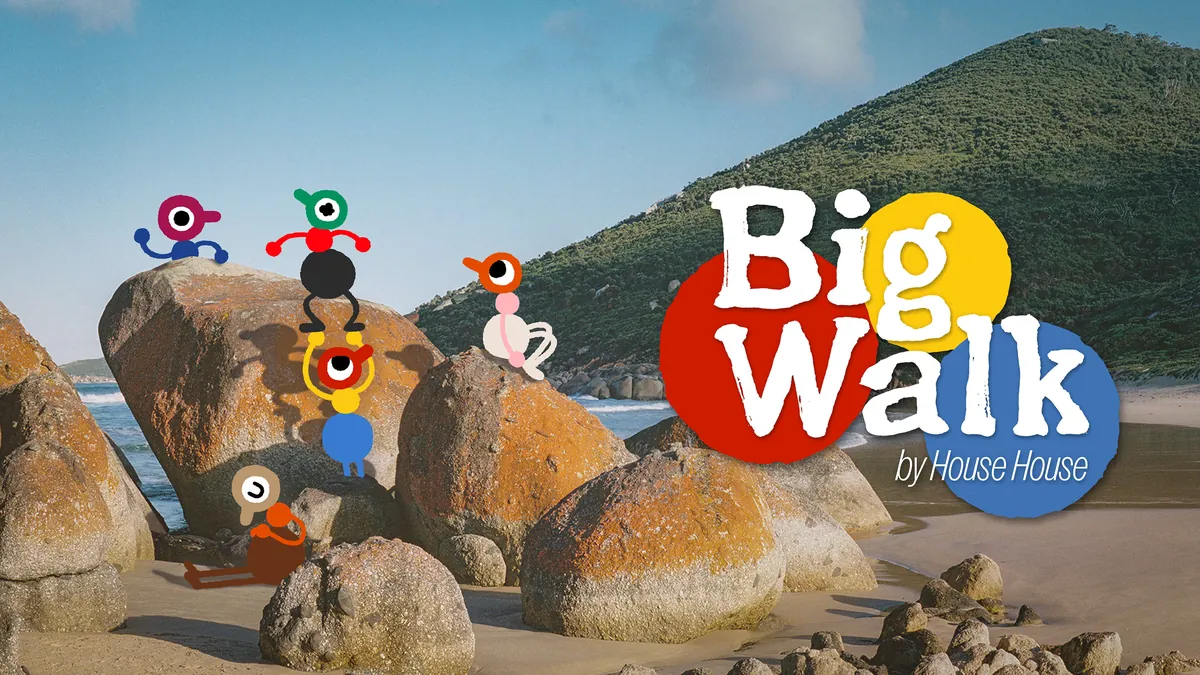
House House, the Australian studio behind Untitled Goose Game and Big Walk, says it used large language models "sparingly" in the final stretch of Big Walk's development, and estimates "well under 0.1%" of the game's code had anything to do with it. The studio added the disclosure to Big Walk's official FAQ after a statement from Independent Games Festival jurors on 9 Nov (10 Nov AEST), Kotaku reports.
In that statement, 19 IGF jurors said they would decline to vote for any game that uses generative AI "in any capacity", and said AI-written code is "not an exception", VGC and PC Gamer report. Kotaku reports that a juror said House House had disclosed its LLM use to the judges, as IGF rules required. The jurors' statement doesn't name a game.
House House says it mainly used chatbots to research problems in third-party code. Its example is a Unity shadow bug that made Big Walk run 50% slower for about 20 seconds at sunrise and sunset; after its own research and an engineer at Unity came up empty, a chatbot suggested a fix that the team had to change extensively, ending up as about 10 lines of code inside Unity's rendering pipeline. The studio says generative AI wasn't used anywhere else in the game.
It also says it didn't disclose on Steam because Steam doesn't ask about code or chatbot use, that the FAQ entry "is not an endorsement" of AI tools, and that making Big Walk without an internal AI policy was "a failure" it will fix with a policy from now on. Steam's wider approach is in Valve says it won't gatekeep AI-made games on Steam.
Read next
Analyst firm Ampere Analysis puts the US at about 1.5 million and the UK at 600,000. Players in New Zealand needed no trick at all.
Image: Rockstar Games
New stories every day by 12pm PT (6am AEST).
More from 11 Nov
- FPSOverwatch 6v6 Role Queue returns to Competitive for a four-week Season 6 test
- RPG & ActionGTA 6 targets 30fps on PS5 and Xbox, with ray-traced shadows on PS5 Pro and cloud play on Xbox One
- MMOWoW Forever PvP: Blizzard makes the bigger faction harder to create and thins crowded zones
- FGCTekken 8 Roger Jr. early access starts, with a new Nike x Tekken King collection